European Common History for a Better Future: remembering our past shapes tomorrow
Reconstructing the path of European integration not only through textbooks, but through the faces, voices, and artistic expressions of those who experienced it firsthand: this is the goal of the European Common History for a Better Future project, a transnational campaign that has transformed collective memory into a tool for action for new generations.
The results achieved by the project combine the value of oral testimony with the visual impact of participatory art. The project, which involved the collaboration of five organizations active in the fields of social promotion, culture, and citizens’ rights, took shape through key historical moments, such as the celebrations of the 75th anniversary of the Schuman Declaration, leading to key results stemming from network collaboration that united digital tools, local meetings, and street artistic expression.
For all the organizations there have been the same results, in Italy in particular the Travelogue association has achieved the following results, thanks to the various collaborations including the Salvatorelli-Moneta Comprehensive Institute in the city of Marsciano, local and international artists, and people between 70 and 80 years old who made us live the first years of the European Union:
- “EUxFUTURE” YouTube Channel: A digital video library featuring testimonies from people aged between 70 and 80, in particular we have interviewed Emilio, Alvaro, Valeriano, Mario and Silvana. The stories revisit personal memories and their perception of how European integration has shaped daily life. Here following the link of the YouTube Channel with all the interviews of all countries that have taken part of this project: https://www.youtube.com/@VideosofEUxFuture
- Photo Exhibitions and Roundtables: Events organized in the five partner countries featuring photo exhibitions on the path of integration and encounters between seniors and youth to foster intergenerational dialogue. On October 13, 2025, the Salvatorelli-Moneta school in Marsciano held the roundtable called “Reflections on the European Integration Process” and brought together a great mix of people including students, teachers, and experts. We were also happy to welcome partners all the way from Malta, making it a truly international gathering. The event of the inauguration of the photo exhibition took place on the same day within the common areas of the Luigi Salvatorelli scientific high school..
- Digital Book (E‑book): A multimedia publication present in all the partnership languages, collecting the photos selected for the exhibitions, accompanied by historical analysis and explanatory sheets.
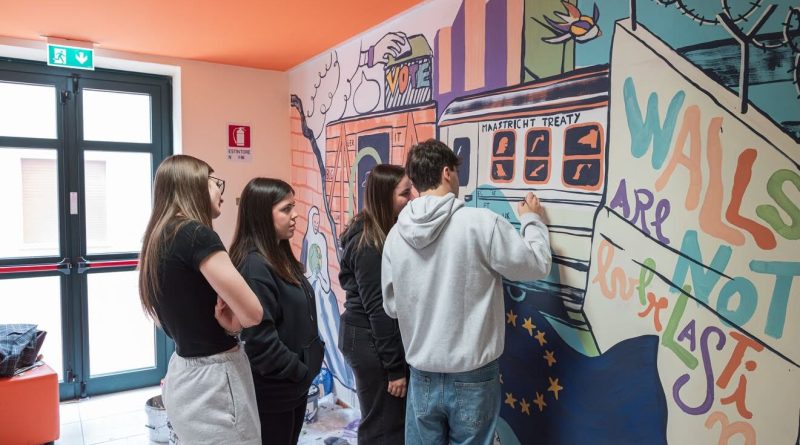
- Participatory Murals and Mediation: Creation of 5 works of participatory street art (one for each country) alongside cultural mediation workshops aimed at the local community. On May 4 and 5 students from classes 5AL and 5AT of the Technical and Professional Institute brought the mural to life. The artwork emerged from a hands-on, highly collaborative creative effort, with students working side-by-side with three European artists: Nicola Alessandrini (Italy), Thomas “Tom” Noone (Ireland), and Eva Šuhájková (Czech Republic).
-
- “Visibilising the Common European History” Video: A final mini-documentary summarizing the collective creative process that led to the creation of the five murals across the different territories.
As we wrap up the project, we reflect on our key objectives and hope the results have met the expectations. The main objectives of the project were:
- To commemorate the 75th anniversary of the Schuman Declaration as a relevant historical moment for the process of European integration;
- To develop participatory and intergenerational activities in which citizens can share and build together their knowledge about the European Union;
- To foster citizens’ sense of belonging to the European Union by analysing the experiences and impact of the European integration process on their lives;
- To create a network of organisations from five European countries committed to improving people’s knowledge, understanding and sense of belonging to the European Union.
“This activity is part of the EUxFUTURE project, co-funded by the European Union through the CERV programme.”