
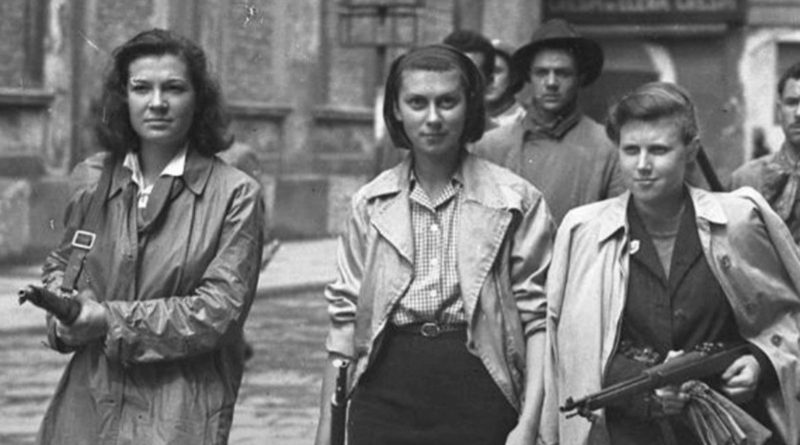
25th April: The Liberation Day
Italy celebrates Liberation Day, known in Italian as Festa della Liberazione , with a national public holiday each year on 25th April . The day is marked with parades across the country, organized by ANPI, Italy’s partisan association which preserves the memory of the Resistance movement against fascism. The occasion is held in commemoration of the end of the Fascist regime and of the Nazi occupation during World War II, as well as the victory of Italy’s Resistance movement of partisans who opposed the regime. Formed in 1943, the partigiani comprised a network of anti-Fascist activists, from diverse backgrounds including workers, farmers, students and intellectuals, across Italy.
The resistance movement in Italy
Resistance developed over time in those areas that were under German control and administered by Mussolini, reinstated as the head of the Italian Social Republic. The first partisans were disbanded soldiers who had managed to avoid being captured and sent to concentration camps after the armistice. This first group of partisans was soon joined by all the young men who refused to be enlisted in the fascist army. The CLN — National Liberation Committee, representing all national antifascist groups, was at the head of the Resistance. Partisan groups gradually grew in strength and expertise regardless of the harsh repression carried out by the Germans and the fascists, who did not hesitate to harm civilians in order to put an end to their support to the partisans.
Liberation
The first uprising and liberation took place in Bologna on 21 April 1945, followed two days later by Genoa, then Milan on 25 April, and Turin and Venice on 28 April.
All of northern Italy was liberated by 1 May, with the advance of the Allied forces, leading the occupying German forces to surrender officially on 2 May.
The Festa della Liberazione represents a significant turning point in Italy’s history, paving the way for the referendum of 2 June 1946 when Italians voted in favor of a republic and against the monarchy which had been discredited during the war and whose members went into exile.
Bella Ciao
The annual event on 25th April is marked with the laying of wreaths at monuments and tombstones honoring the women and men who fought in the Resistance, and the singing of Bella Ciao , the anthem of the anti-Fascist resistance.
Bella Ciao was originally a 19th-century Italian protest folk song, lamenting the harsh working conditions of the mondina workers in the paddy fields of northern Italy.
The song’s lyrics were modified in the 1940s to tell the story of a young man who bids farewell to his love (“goodbye beautiful”) to join the Italian partisans.
April 25th in Europe
April 25th in Europe is primarily marked by major national holidays celebrating freedom and democracy, most notably Liberation Day in Italy ( Festa della Liberazione ) and the Carnation Revolution in Portugal . These public holidays feature commemorations, parades, and cultural events reflecting on the end of dictatorship and Nazi occupation. 25 April marks the liberation from a long-lasting dictatorship and the end of the war. Italy became free in 1945, after twenty-three years of fascist dictatorship and five years of war. Portugal ended forty-eight years of dictatorship and fourteen years of colonial wars in 1974.
“This activity is part of the EUxFUTURE project, co-funded by the European Union through the CERV programme.”